Initial Thoughts BAE Urban Economics' Analysis of Measure ULA
The analysis has serious flaws, and advocates are drawing sweeping conclusions from narrow findings.
77 posts.
The analysis has serious flaws, and advocates are drawing sweeping conclusions from narrow findings.
Measure ULA needs fixing, and these changes will make a real difference.
The state must step in to make multifamily housing legal in more places, and make it faster, simpler, and less expensive to build where multifamily housing is legal.
Every city has one of three futures: A growing housing stock, growing housing prices , or stagnation and decline.
So many groups and individuals need more people fighting on their behalf — why spend your time advocating for housing that only rich people can afford? Lots of reasons that have nothing to do with making rich people’s lives easier, as it turns out.
Expanding Fire District 1 would make it more expensive to build new homes, increase greenhouse gas emissions, and do nothing to improve safety.
With government-chartered regional housing cooperatives and access to attractive federal financing, we could transform the rental market to provide renters with greater wealth, stability, and flexibility.
Upzone the Westside and strengthen tenant protections everywhere.
There’s a debate happening right now over whether to apply “value capture” to a statewide parking reform bill — California State Assemblymember Laura Friedman’s AB 1401 . As someone who supports value capture in the context of upzoning, and advocates strongly for it in my book, The Affordable City ,
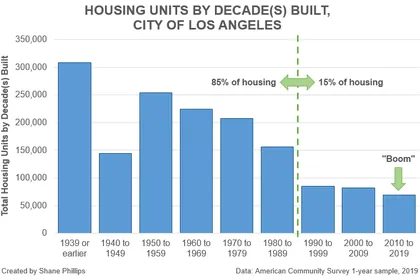
LA’s “housing boom” is actually a continuation of three decades of very limited housing production.
As a wealth-building, publicly-owned housing option, a rental pension program could offer all of the benefits of renting with many of the benefits of homeownership. It could also break the stranglehold that homeowners have on high-demand cities.
The costs of Prop 15 will be borne by commercial and industrial property owners, not businesses. It won’t discourage residential development and doesn’t apply to residential properties, including multifamily projects. And it makes future reform more likely, not less.
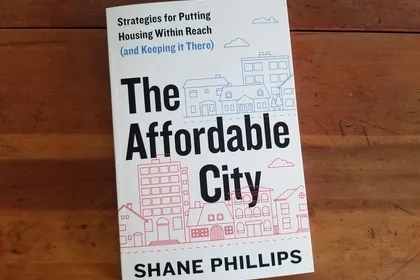
My new book, The Affordable City , is out on September 15th. This post includes an excerpt from the Stability policies section, making the case for why tenants deserve protection against the whims of the market and individual landlords.
My new book, The Affordable City , is out on September 15th. This post includes an excerpt from the Supply policies section, helping illustrate how affordability is influenced by housing abundance or scarcity.
My new book, The Affordable City , is out on September 15th. This post includes an excerpt from the introduction, explaining why Supply, Stability, and Subsidy must all be priorities for housing advocates and professionals.
The biggest beneficiaries of Proposition 13 would pay higher transfer taxes when they sold their homes.
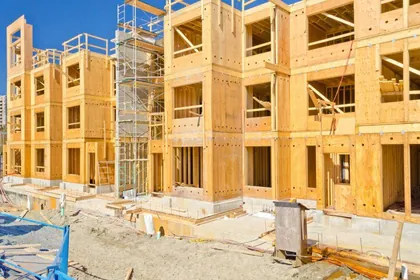
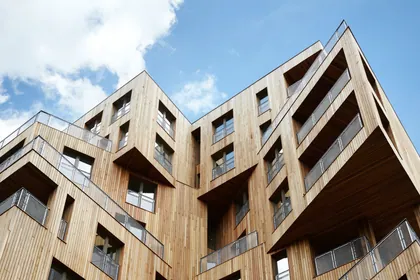
Learn more about the cost, schedule, economic, and environmental benefits of mass timber in a white paper I worked on earlier this year, including recommendations for how cities and states can speed its adoption.
I’m officially partnering with Island Press on a book about housing affordability and the need to make strong tenant protections, abundant housing supply, and big public subsidies co-equal priorities for advocates and policymakers. Please join my mailing list for updates!
In neighborhoods across the country, it’s single-family homes, not new condos and apartments, that command the highest prices.
Measure S won't fix the affordable housing crisis. When the vote is over, win or lose, what can we do that will actually move the needle?
Bear with me; there are a lot of them.
In just the past three weeks, 1,300 homes for low-income residents and the formerly homeless were proposed in Los Angeles. Measure S would block them all.
There's a local election coming up for the City and County of Los Angeles on March 7th, 2017. Here's how you should vote on the 5 ballot measures.
At least 19,000 desperately-needed homes, including thousands of affordable units, could not be built if Measure S passes in the March 7th Los Angeles election.
Measure S is an ego trip masquerading as a social justice crusade. It's the Donald Trump of ballot initiatives, and these are 7 of the most important reasons that Los Angeles can't allow it to pass.
Read here for additional details on my DTLA 2040 Community Plan update counter-proposal and argument for more housing downtown.
The city has put together an early draft of its proposal for the DTLA 2040 Community Plan update. It doesn't go far enough, and I think we can do better.
Two recent posts on the Abundant Housing LA blog highlight where we stand on the city's efforts to alleviate the housing shortage.
Between 2010 and 2015, Los Angeles built ten new multifamily homes for every one it tore down. But we can do better than that.
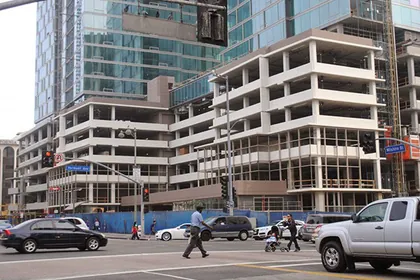
The City Planning department has some ideas for how to improve parking policy and reduce the prevalence of parking podiums in downtown LA. Here are my thoughts.
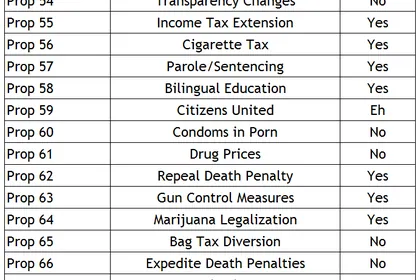
A cheat-sheet voting guide for 17 California ballot initiatives, and several more in Los Angeles County, the City of LA, and Santa Monica.
Analysis and recommendations for all 17 California ballot initiatives, along with some local ones in LA County, the City of Los Angeles, and Santa Monica.
Stabilized rents are not synonymous with affordable rents.
Right now rent stabilization applies to multifamily housing built before 1979. Instead, we should consider a "rolling" threshold that includes all buildings over 30 years old.
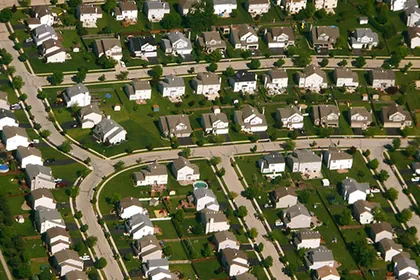
We've made it illegal to build almost anything but single-family homes and car-oriented strip malls, but why stop there? Begone, suburbs; bring back the orchards.
" The reason for the history lesson is: We paved over the orchards to make way for the Baby Boomers, and now the Boomers are fighting with Millennials who want to turn one-story strip malls into four-story apartments."
Forecasts rarely pan out, yet they're a foundation of the planning process. Instead, we should plan around something we can measure in real time: vacancy rates.
When you get a raise, a lot of that new income is taxed away. When your home doubles in value, you can pretty much keep it all.
Along with its many other benefits, a non-profit acquisition-based affordable housing program could also increase tenant mobility.
A non-profit housing acquisition program could start small, focusing first on residents displaced by Ellis Act evictions, and grow from there after proving its efficacy.
Apartment tenants at risk of displacement have good reason to oppose new development. Instead of demonizing them, we should be helping them.
We share the same goals, but our focuses differ. Can we reconcile our differences and come together?
To all the bureaucrats, advocates, wonks, writers, and politicos working on urban planning issues in Los Angeles, I implore you: Drink more beers together. Wine or cocktails is also acceptable.
By planning decades into the future, built-out cities can create Central Park-style open spaces at minimum cost and with limited displacement.
Opposing new development because it requires demolition of some rent-controlled units is shortsighted, and overlooks the many real affordability solutions available to us.
Using affordable housing funds to acquire existing buildings is less expensive and more sustainable than using them to subsidize new units, and would be accompanied by numerous other benefits to the housing market and low-income residents.
A little bit of behavioral economics might help us get more affordable housing out of the state's density bonus law.
Governor Jerry Brown has a new plan to streamline the approval process for multifamily developments that include affordable housing. Here's what the bill actually says.
Proposition U froze our commercial corridors in time and contributed to our affordability crisis. Repealing it may be the best thing we can do to heal the wounds of the past.
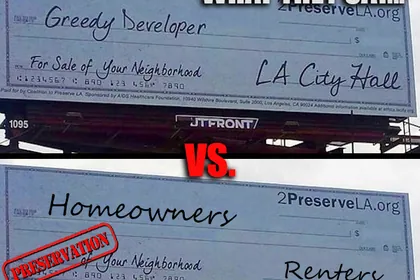
Are greedy developers responsible for Los Angeles' affordable housing crisis? Or greedy, misguided homeowners?
If housing development is the cause of skyrocketing rents, why are no-growth communities like Venice and Brentwood increasing in value just as quickly as hot markets like downtown and Hollywood?
We're pro-environment but anti-density, pro-immigration but anti-migration, and pro-equity but anti-housing. Our ideology is completely detached from our policy outcomes, and its killing our cities.
The Neighborhood Integrity Initiative is an ego trip masquerading as a social justice crusade. It's the Donald Trump of ballot initiatives, and these are 7 of the most important reasons that Los Angeles can't allow it to pass.
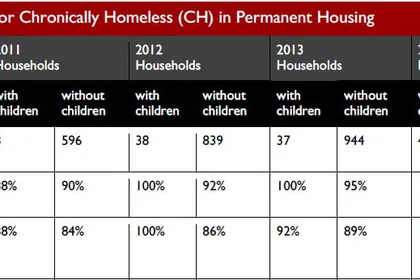
Eliminating homelessness is an expensive proposition, but we can pay for the great majority of it by simply redirecting money that's already being spent inefficiently on treating homeless individuals on the street.
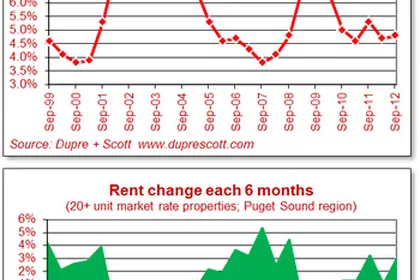
As myself and others have been arguing for years, the most important way to limit rent increases is to allow enough housing to be built to meet growing demand. Early evidence from Seattle shows that it's working.
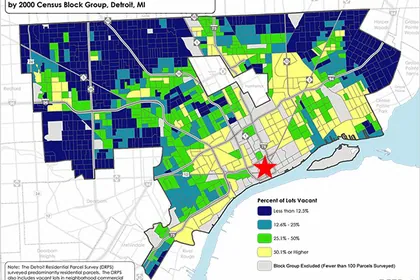
Shrinking cities like Detroit have an opportunity to try something truly radical in modern America: designate permanently pro-growth districts that can avoid many of the worst aspects of local opposition to development.
When looking at how housing prices are changing in a growing city, average rents can be misleading—especially you're concerned with pre-existing units.
Everyone seems to be concerned with Millennials growing up and leaving the city, yet they seem to forget that there's a whole other generation coming up behind them, and its even more anti-car and pro-city.
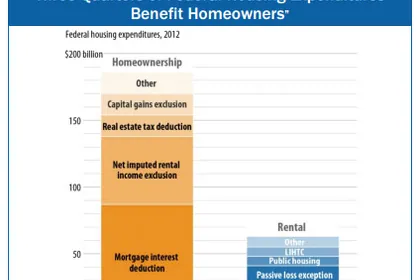
In this country we waste upwards of $200 billion a year on subsidies for wealthy people to buy bigger houses and for drivers to destroy our cities and pollute our environment. Are these really the incentives we want to be providing?
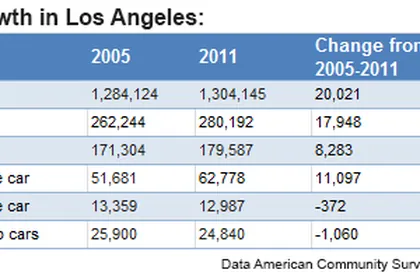
Who knew? Even Los Angeles, despite its reputation, is attracting thousands of car-free and car-lite households.
If we want more affordable housing, one of the quickest and easiest ways to get it is to allow developers to build homes with limited parking—or none at all.
The mortgage interest tax deduction is a giveaway to wealthy households to help them buy bigger housing, and provides almost no benefit to lower and middle income households. We should stop worrying about tinkering around the edges and abolish it altogether.