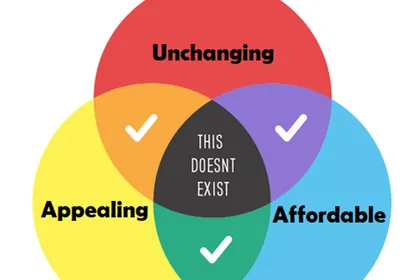
There's no such thing as a "no growth" community
Every city has one of three futures: A growing housing stock, growing housing prices , or stagnation and decline.
If you are new here, start with these 30 posts.
Every city has one of three futures: A growing housing stock, growing housing prices , or stagnation and decline.
So many groups and individuals need more people fighting on their behalf — why spend your time advocating for housing that only rich people can afford? Lots of reasons that have nothing to do with making rich people’s lives easier, as it turns out.
With government-chartered regional housing cooperatives and access to attractive federal financing, we could transform the rental market to provide renters with greater wealth, stability, and flexibility.
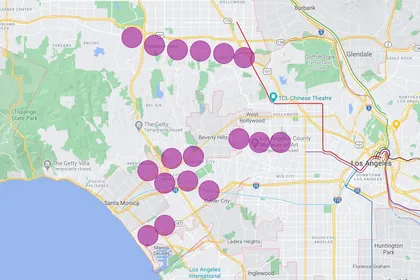
Upzone the Westside and strengthen tenant protections everywhere.
There’s a debate happening right now over whether to apply “value capture” to a statewide parking reform bill — California State Assemblymember Laura Friedman’s AB 1401 . As someone who supports value capture in the context of upzoning, and advocates strongly for it in my book, The Affordable City ,
Measure S won't fix the affordable housing crisis. When the vote is over, win or lose, what can we do that will actually move the needle?
Bear with me; there are a lot of them.
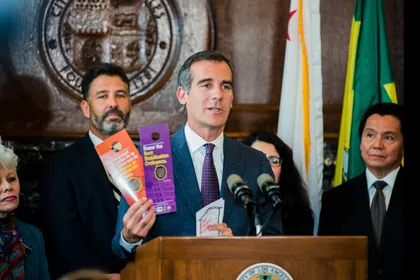
In just the past three weeks, 1,300 homes for low-income residents and the formerly homeless were proposed in Los Angeles. Measure S would block them all.
At least 19,000 desperately-needed homes, including thousands of affordable units, could not be built if Measure S passes in the March 7th Los Angeles election.
Measure S is an ego trip masquerading as a social justice crusade. It's the Donald Trump of ballot initiatives, and these are 7 of the most important reasons that Los Angeles can't allow it to pass.
The city has put together an early draft of its proposal for the DTLA 2040 Community Plan update. It doesn't go far enough, and I think we can do better.
Analysis and recommendations for all 17 California ballot initiatives, along with some local ones in LA County, the City of Los Angeles, and Santa Monica.
Stabilized rents are not synonymous with affordable rents.
Right now rent stabilization applies to multifamily housing built before 1979. Instead, we should consider a "rolling" threshold that includes all buildings over 30 years old.
" The reason for the history lesson is: We paved over the orchards to make way for the Baby Boomers, and now the Boomers are fighting with Millennials who want to turn one-story strip malls into four-story apartments."
Forecasts rarely pan out, yet they're a foundation of the planning process. Instead, we should plan around something we can measure in real time: vacancy rates.
When you get a raise, a lot of that new income is taxed away. When your home doubles in value, you can pretty much keep it all.
Along with its many other benefits, a non-profit acquisition-based affordable housing program could also increase tenant mobility.
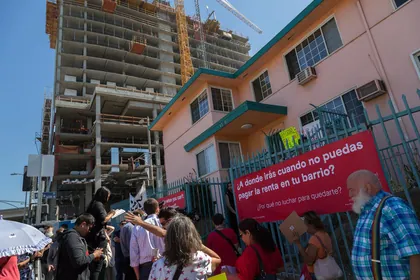
Apartment tenants at risk of displacement have good reason to oppose new development. Instead of demonizing them, we should be helping them.
We share the same goals, but our focuses differ. Can we reconcile our differences and come together?
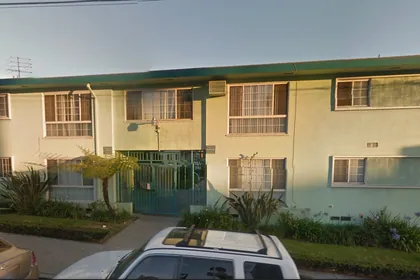
Opposing new development because it requires demolition of some rent-controlled units is shortsighted, and overlooks the many real affordability solutions available to us.
Using affordable housing funds to acquire existing buildings is less expensive and more sustainable than using them to subsidize new units, and would be accompanied by numerous other benefits to the housing market and low-income residents.
A little bit of behavioral economics might help us get more affordable housing out of the state's density bonus law.
Proposition U froze our commercial corridors in time and contributed to our affordability crisis. Repealing it may be the best thing we can do to heal the wounds of the past.
We're pro-environment but anti-density, pro-immigration but anti-migration, and pro-equity but anti-housing. Our ideology is completely detached from our policy outcomes, and its killing our cities.
The Neighborhood Integrity Initiative is an ego trip masquerading as a social justice crusade. It's the Donald Trump of ballot initiatives, and these are 7 of the most important reasons that Los Angeles can't allow it to pass.
Eliminating homelessness is an expensive proposition, but we can pay for the great majority of it by simply redirecting money that's already being spent inefficiently on treating homeless individuals on the street.
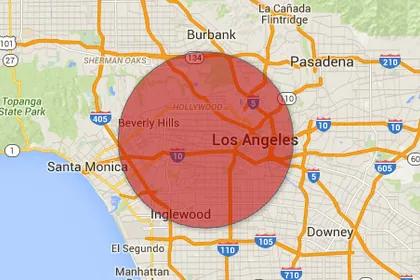
What if you took all 200 square miles of parking in Los Angeles County and turned it into one giant parking lot? This map puts into perspective how much space we waste on car storage in LA, and around the country.
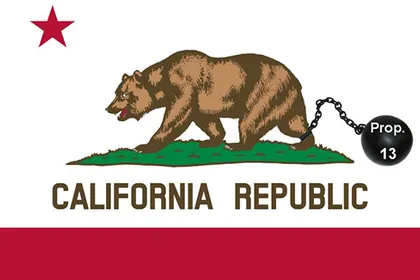
Prop 13 is considered the "third rail" of California politics, but that may be changing. Here's one idea for how to shift the politics and fix many of the worst impacts of the law, while still preserving its protections for low-income homeowners.
Proposition 13 is a citizen's initiative passed in California 1978, and to this day it continues to squeeze the state's housing market and primarily benefit older, whiter, longer-term residents at the expense of everyone else.